45% Response vs 6%: How Service Businesses Should Use SMS and Email
45% Response vs 6%: How Service Businesses Should Use SMS and Email
Neither channel wins outright. Email handles depth and nurture; SMS handles urgency and action, and the two work best paired rather than pitted against each other. If you’re starting from scratch, launch SMS narrowly, around high-intent moments like appointment reminders or cart recovery, and let email carry the storytelling and volume.
TL;DR:
- SMS has nearly universal open rates and response rates that are significantly higher than email, especially for time-sensitive and urgent messages.
- Email is better suited for long-form, visual content, automated workflows, and campaigns with a larger budget, due to its unlimited length and lower per-message cost.
- The effectiveness of SMS relies heavily on proper opt-in consent and frequency control to avoid fatigue, spam reports, and carrier blocking.
- Combining email and SMS with coordinated sequences boosts engagement; adapting the specific channel based on message urgency, content, and audience preference yields the best results.
- Implementing a unified platform for both channels simplifies management, reduces manual work, and improves compliance and overall campaign performance.
Table of Contents
- SMS vs Email Marketing Comparison: The Key Numbers
- What Is SMS Marketing, and What Can It Actually Do?
- What Is Email Marketing, and Where Does It Win?
- Benchmarks That Actually Move Your ROI
- Strengths, Weaknesses, and Where Programs Fail
- Choosing SMS, Email, or Both for Any Campaign
- Staying Compliant While Protecting Deliverability
- Building a Combined SMS and Email Sequence
- Coordinating Reminders and Follow-Ups for Service Businesses
- What I’d Actually Tell a Marketer Testing This
- Run Both Channels Without Juggling Two Systems
- Where These Numbers Come From
- Sources
SMS vs Email Marketing Comparison: The Key Numbers
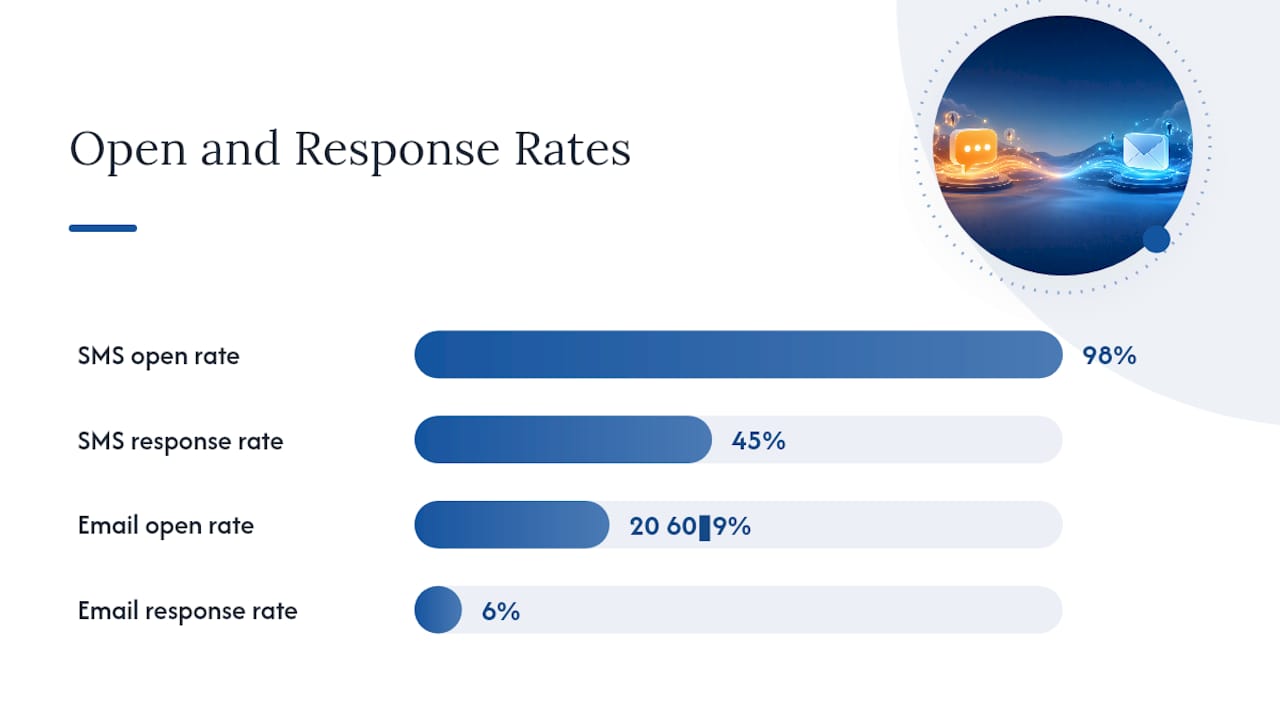
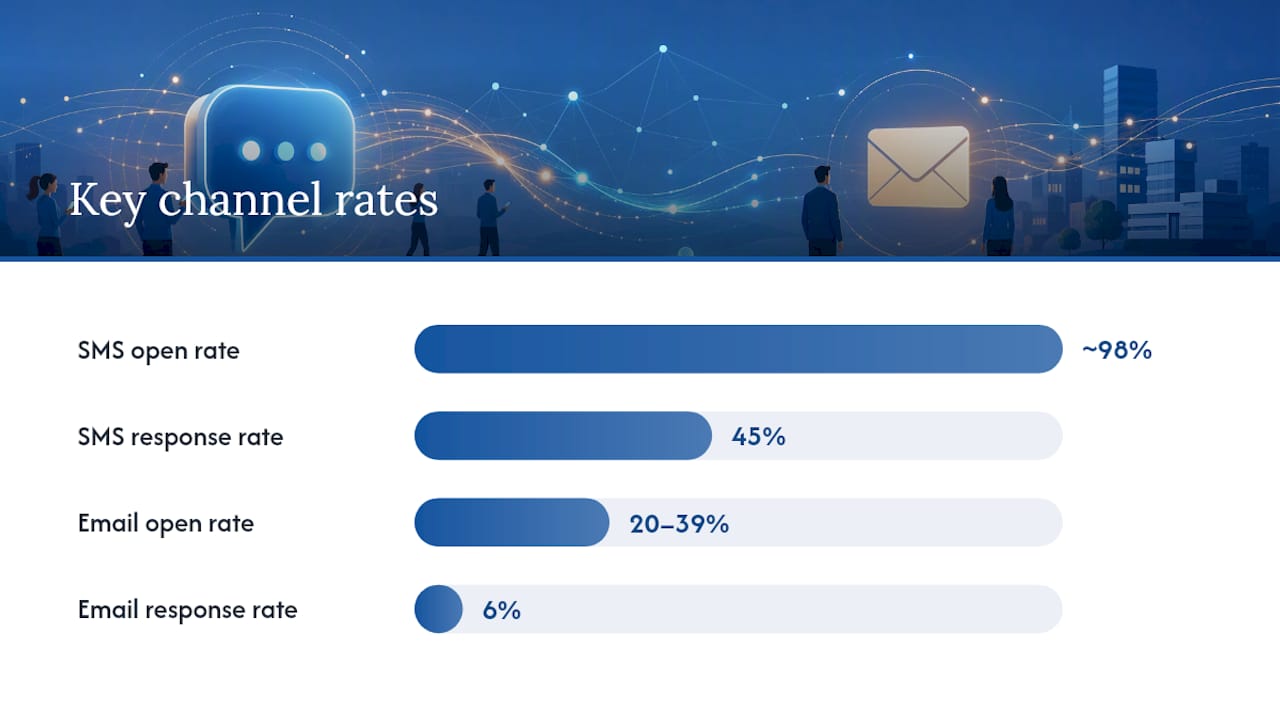
The gap in engagement is where this debate usually starts, and it’s wider than most marketers expect. SMS open rates run near 98%, while email open rates typically land between 20% and 39% depending on industry and list health. Response rates tell a similar story: SMS averages 45% response versus 6% for email, roughly 7.5 times higher.
Read time separates the two just as sharply. Most texts get read within three minutes, while the median email sits unread for hours before someone opens it, if they open it at all. Cost tells the opposite story. Email costs fractions of a cent per send at scale; SMS runs several cents per message once carrier fees enter the picture.
Here’s how that breaks down by channel strength:
- SMS wins on speed and reach: near-instant opens, best for reminders, alerts, and flash offers with a short shelf life.
- Email wins on depth and economics: unlimited content length, automation flows, and a per-send cost that makes high-volume campaigns viable.
- SMS wins on response: two-way texts and click-to-reply drive faster action than a “click here” button buried in an inbox.
- Email wins on segmentation: dynamic content blocks and behavioral triggers let you personalize at a scale texting can’t match affordably.
What Is SMS Marketing, and What Can It Actually Do?
SMS marketing means sending short text messages, usually broadcasts, appointment reminders, two-way conversations, or transactional alerts like shipping updates, directly to a customer’s phone. Standard messages cap at 160 characters per segment; anything longer splits into multiple segments and multiple charges. MMS messages, which carry images or video, cost more and behave differently across carriers.
Opt-in matters more here than in almost any other marketing channel. Common paths include:
- Checkout opt-ins, where a customer checks a box during purchase.
- Keyword opt-ins, where someone texts a word like “JOIN” to a short code.
- Point-of-sale sign-ups collected in person or through a booking form.
SMS works best when the message needs to be seen in minutes, not hours. It’s a poor fit for long explanations, catalogs, or anything that needs a hyperlink-heavy layout.
What Is Email Marketing, and Where Does It Win?
Email marketing covers newsletters, automated flows (welcome series, cart abandonment, post-purchase), and one-off promotional blasts. Its real advantage is flexibility: you can build a layout with images, multiple calls to action, and long-form copy without paying per character.
Automation is where email pulls ahead operationally. A single welcome flow can run for months, adjusting content based on what a subscriber clicks, without a marketer touching it again. Segmentation goes deeper too, splitting lists by purchase history, browsing behavior, or lifecycle stage at no added per-send cost.
Email fits better than SMS when:
- The message needs visuals, detailed product information, or multiple links.
- You’re nurturing a lead over weeks rather than prompting action in minutes.
- Budget constraints rule out per-message fees on a large list.
Benchmarks That Actually Move Your ROI
Numbers without context don’t help anyone plan a budget, so here’s how the core metrics line up side by side.
| Metric | SMS | |
|---|---|---|
| Open rate / read time | ~98% open, read within minutes | 20–39% open, hours to read |
| Response / click rate | 45% average response | 6% average response |
| Cost per send | Several cents per message | Fractions of a cent per message |
| Content richness | 160 characters per segment, limited MMS | Unlimited length, images, multiple links |
| Opt-in complexity | Strict consent, carrier registration | Simpler opt-in, unsubscribe-based |
Statistic Callout: SMS response rates outperform email by roughly 7.5 times ([45% vs. 6%](https://notifyre.com/us/blog/sms-marketing-statistics)), but that gap narrows once you factor in the volume email can send for free.
Statistic Callout: Email automations frequently generate more revenue per send than one-off broadcast campaigns on either channel, which is why flows matter more than blasts.
Run the math on a 10,000-send campaign and the picture gets interesting. SMS sent to the same list at a few cents each might cost several hundred dollars outright, but if response rates hold near 45%, the number of actual conversions can outpace email, especially for time-sensitive offers. Cost-per-send is the wrong number to optimize. Cost-per-conversion is the one that matters.
Strengths, Weaknesses, and Where Programs Fail
SMS earns its reputation for immediacy, but that same immediacy creates fatigue faster than email ever does. Text too often and subscribers opt out or, worse, report the number as spam, which can get it blocked by carriers. Email’s inbox is crowded, competing against dozens of other senders daily, but its per-send cost stays low enough that occasional inefficiency doesn’t sink a budget.
Three mistakes show up again and again:
- Treating SMS like email. Sending long, promotional texts multiple times a week burns trust faster than a single missed sale is worth.
- Ignoring segmentation on email. Blasting the full list instead of triggering based on behavior wastes the automation advantage entirely.
- Skipping compliance groundwork. Sending SMS without proper consent records or carrier registration risks message blocking before a campaign even launches.
Pro Tip: Cap promotional SMS at one or two sends per week per subscriber. Save the third message for something genuinely time-sensitive, like a same-day appointment slot opening up.
Choosing SMS, Email, or Both for Any Campaign
The decision usually comes down to three questions: how urgent is the message, is it transactional or educational, and what does this specific audience actually prefer.
Time-sensitive, short messages belong on SMS. Appointment reminders, order-ready alerts, and flash sales with a same-day deadline all convert better as texts because they get read in minutes rather than sitting in an inbox. Longer, story-driven, or catalog-style content belongs in email. A product launch that needs photos, specs, and multiple links has no business being crammed into 160 characters.
Some concrete pairings:
- Abandoned cart: email first with product images, SMS follow-up 24 hours later if unopened.
- Appointment reminders: SMS only, sent 24 hours and 2 hours before the slot.
- Product launches: email for the full story, SMS for the last-chance countdown.
- Newsletters: email exclusively; SMS has no format for long-form content.
Before expanding a channel, run a small test: pick one campaign type, measure baseline conversion, then add the second channel and measure lift. If SMS adds meaningful conversion without a spike in opt-outs, expand it to adjacent campaigns.
Staying Compliant While Protecting Deliverability
Regulatory overhead differs sharply between the two channels. SMS in the U.S. falls under the TCPA and 10DLC registration requirements, which govern consent, sender registration, and message content, with real financial penalties for violations. Email operates under CAN-SPAM, which is comparatively lighter, mainly requiring clear sender identification and a working unsubscribe link.
Carrier filtering is tightening as SMS volume grows year over year, which means sloppy opt-in practices get penalized faster than they used to.
Practical steps that keep both channels healthy:
- Use double opt-in for SMS keyword sign-ups to document clear consent.
- Monitor opt-out rates weekly; a spike signals frequency fatigue before it becomes a deliverability problem.
- Avoid spam trigger words and excessive punctuation in email subject lines.
- Cap SMS frequency explicitly in your opt-in language so subscribers know what they signed up for.
Pro Tip: Review your SMS opt-in flow at checkout at least twice a year. Carrier rules shift, and an outdated consent flow is the fastest way to get a sender number flagged.
Building a Combined SMS and Email Sequence
A coordinated sequence beats a single-channel blast almost every time, because each channel picks up where the other one’s weakness starts.
- Day 0: Send the primary offer or content by email, with full detail and imagery.
- Day 1: Segment non-openers and send a shorter SMS reminder with a direct link.
- Day 3: Send a last-chance SMS only to those who clicked but didn’t convert.
- Day 7: Follow up by email with a receipt, review request, or related offer.
Trigger SMS specifically for non-openers or cart abandoners rather than the full list, since SMS fatigue builds faster than email fatigue.
Statistic Callout: Pairing email storytelling with an SMS urgency nudge produces measurable lifts over either channel sent alone. Track open rate, click rate, and conversion rate per channel, then compare blended conversion against a single-channel control group to confirm the lift is real.
Coordinating Reminders and Follow-Ups for Service Businesses
Service businesses run on appointments, and the reminder-to-invoice sequence is where combined messaging pays off fastest. A platform that keeps customer records, scheduling, and a campaign dashboard under one login makes that sequence easy to build once and reuse for every job.
A typical flow: an SMS reminder goes out the morning of a service call, then a follow-up email lands afterward with the invoice and a review request or seasonal offer. Reports suggest shifting reminders from email to SMS can cut no-shows by 20–40%, a meaningful swing for any business billing by the job. Running customer records, scheduling, and messaging from one login removes the manual re-entry that usually breaks this kind of sequence.
What I’d Actually Tell a Marketer Testing This
The “SMS vs email” framing misleads people into picking a side when the real skill is routing each message to the right channel. Start with one SMS use case, appointment reminders or cart recovery are the safest bets, measure the lift honestly, then expand. Respect opt-out signals immediately. A subscriber who unsubscribes from texting once rarely gives you a second chance.
— Philip
Run Both Channels Without Juggling Two Systems
There are platforms that offer service businesses one place to run sequences involving SMS reminders, email follow-ups, invoices, and customer records under a single login instead of stitching together separate tools.
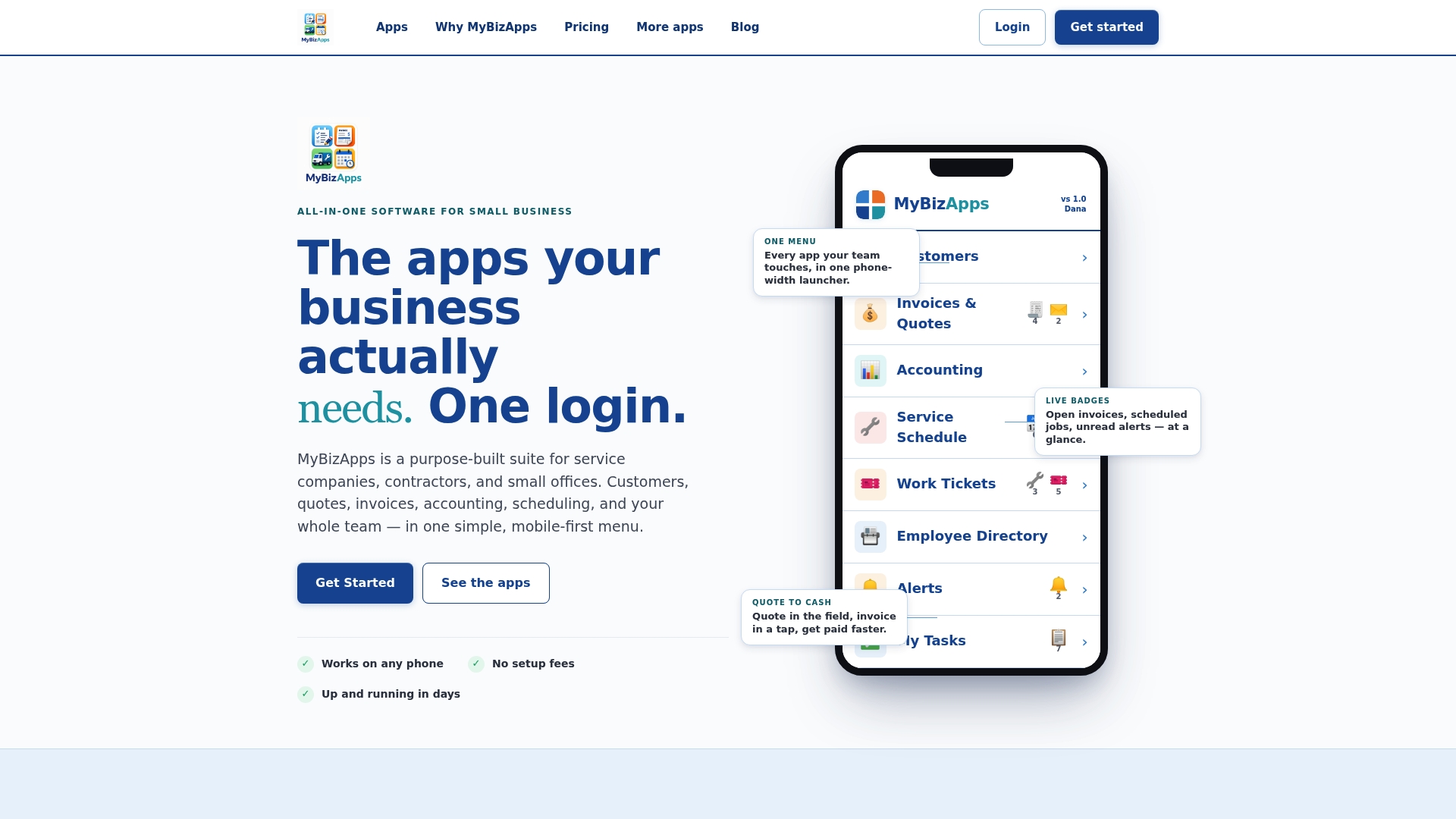
Some marketing dashboards include AI campaign tools alongside scheduling, quoting, and invoicing features, enabling reminders sent to customers’ phones to trigger follow-up emails with invoices attached, without re-entering contact information. That kind of coordination is exactly what separates a one-off text blast from a system that actually reduces no-shows and speeds up payment.
If you’re weighing what a setup like this costs against running SMS and email separately, check the price sheet or browse full plan details to see which tier fits your customer volume.
Where These Numbers Come From
The benchmarks in this article draw from a handful of sources worth bookmarking if you’re building a business case internally. NotifyRE’s SMS statistics cover response-rate comparisons. ReadySMS breaks down ROI and cost-per-conversion math. MessageIQ explains TCPA and 10DLC compliance in plain language, and Infobip’s report tracks SMS growth trends industry-wide.
Sources
- SMS marketing statistics — NotifyRE
- SMS vs Email Marketing in 2026: ROI, Open Rates, and When to Use Each — ReadySMS
- SMS marketing statistics — Infobip