Cash vs Accrual Accounting for Small Businesses: The First 90 Days
Cash vs Accrual Accounting for Small Businesses: The First 90 Days

Cash accounting records transactions when money moves; accrual accounting records them when they are earned or incurred, regardless of when payment lands. Many small service businesses choose cash basis for its simplicity and the control it gives over tax timing, but eligibility depends on IRS rules and your business structure, so it is worth confirming before you file.
TL;DR:
- For 2026, corporations and partnerships other than tax shelters can generally use cash accounting when three year average receipts do not exceed about $32 million.
- Businesses that buy and sell inventory generally need accrual accounting for purchases and sales, although smaller operations may qualify for an IRS exception.
- Service businesses with quick payment and no inventory often find cash basis simpler; multi month contracts and financing needs favor accrual records.
- Changing methods may require IRS Form 3115 and a Section 481(a) adjustment; calculate the tax effect with a professional before filing.
- You can keep accrual records for management and file on a cash basis for taxes when IRS rules permit, reconciling both regularly.
Table of Contents
- Cash-Basis and Accrual-Basis Accounting Explained
- Comparing Timing, Balance Sheets, and Cash Visibility
- Who Typically Uses Each Method
- Tax Rules and Eligibility for Choosing a Method
- Bookkeeping Effort and What Lenders Expect
- How to Choose the Right Method for Your Business
- Switching Methods: Planning and the First 90 Days
- What Clean Records Actually Change
- Simpler Invoicing and Accounting, One Login
- FAQ
- Sources
Cash-Basis and Accrual-Basis Accounting Explained
Cash-basis accounting records income when you actually receive payment and expenses when you actually pay them. If you send an invoice in November but your customer pays in January, that income shows up on your books in January, not November. It is the method most people use for personal finances, and it mirrors your bank balance closely.
Accrual-basis accounting records income when it is earned and expenses when they are incurred, independent of when cash changes hands. A landscaping company that completes a job in December books that revenue in December even if the invoice is not paid until February. The same logic applies to expenses: a bill received in March for services already performed gets recorded in March, not when the check goes out.

Accrual accounting exists to match revenue and expenses to the period in which the underlying activity actually happens, which is the foundation of FASB’s revenue-recognition guidance. That standard directs businesses to recognize revenue around the transfer of promised goods or services, not simply when an invoice goes out or a payment clears.
A few points worth knowing before you pick a side:
- Hybrid methods exist and combine elements of both, often used when a business has inventory but otherwise operates on a cash basis.
- IRS Publication 538 covers these hybrid approaches and the specific conditions under which they apply.
- Neither method is “more correct” on its own; each serves a different reporting purpose.
Comparing Timing, Balance Sheets, and Cash Visibility
The two methods diverge most visibly in when income and expenses hit your books, and that timing ripples through everything from your profit and loss statement to how well your records reflect actual liquidity.
Under cash basis, revenue appears on the P&L the moment payment arrives, so a slow quarter with collections from old invoices can look stronger than it actually is operationally. Under accrual, revenue shows up when earned, which means your P&L reflects performance for that period even if the cash has not arrived yet. Expenses follow the same pattern: cash basis waits until money leaves your account, while accrual books a cost as soon as it is incurred, prepaid expenses get spread across the periods they benefit rather than dumped into the month you paid for them.
That timing difference changes what shows up on your balance sheet:
- Accrual accounting tracks accounts receivable (money owed to you) and accounts payable (money you owe), neither of which exists on a cash-basis balance sheet.
- Deferred revenue, payments received before you deliver the service, only appears under accrual, since cash basis would just count it as income the moment it lands.
- Accrued liabilities, like wages earned but not yet paid, show up only in accrual books.
Because accrual numbers can show a healthy profit while your bank account is nearly empty, businesses using this method typically need a cash flow statement to explain actual liquidity. Cash-basis books skip that extra step since the bank balance and the accounting records already tell the same story, a point echoed in Congressional Research Service and OpenStax summaries of the trade-off between simplicity and completeness.
Who Typically Uses Each Method
Your business model usually points toward one method before you even weigh the pros and cons.
- Consultants and solo service providers generally favor cash basis because invoices get paid quickly and there is no inventory to track.
- Contractors with short payment cycles often stick with cash basis for the same reason: simple bookkeeping and a bank balance that matches the books.
- Businesses carrying inventory typically need accrual accounting, since matching the cost of goods sold to the period they were sold in requires tracking purchases and sales separately from cash movement.
- Companies with multi-month contracts or subscription revenue lean toward accrual because revenue earned over several months needs to be recognized period by period, not dumped into whichever month payment arrives.
- Businesses seeking outside financing often need accrual-based statements, since lenders and investors expect reporting that reflects obligations and receivables, not just cash on hand.
A common middle path: many small businesses keep accrual records internally for management decisions while filing taxes on a cash basis when IRS rules allow it, getting a fuller operational picture without sacrificing the tax-timing flexibility cash basis offers.
Tax Rules and Eligibility for Choosing a Method
The IRS does not let every business pick freely between cash and accrual, and the rules hinge largely on size and structure.
The central test is the three-year average gross receipts calculation: add up gross receipts from the prior three tax years and divide by three. IRS Publication 538 states that a corporation or partnership other than a tax shelter can generally use the cash method if average annual gross receipts for the prior three years fall at or below the indexed threshold, which recent guidance commonly cites around $32 million for 2026. Short tax years get annualized, and related organizations may need to aggregate receipts when applying the test, so confirm the current figure before relying on it.
Inventory adds another layer. Businesses that buy and sell inventory generally need to use an accrual method for purchases and sales, even if they use cash basis for other parts of the business, though exceptions exist for smaller operations under the same gross-receipts threshold.
Some categories are generally required to use accrual regardless of size:
- Large C-corporations above the gross-receipts threshold.
- Tax shelters, regardless of revenue.
- Certain partnerships with C-corporation partners.
If you need to switch methods, the mechanism is Form 3115, Application for Change in Accounting Method. Filing it may involve a Section 481(a) adjustment, which accounts for the cumulative effect of the switch on prior-year income. The adjustment’s treatment depends on the specific change and applicable rules, so consult a tax professional. The details depend on your specific facts, so this is a conversation to have with a tax professional before filing anything.
Bookkeeping Effort and What Lenders Expect
Accrual accounting asks more of your bookkeeping. You need to track accounts receivable and payable, manage deferred revenue, account for prepaid expenses, and reconcile all of it regularly to keep the numbers accurate. That is more moving parts than cash basis, where the books largely take care of themselves as money moves in and out.
In exchange, cash basis gives you a clearer short-term read on actual liquidity and some tax timing flexibility: you can defer income into next year or accelerate deductible expenses into this one when the rules allow it. Accrual trades that simplicity for a more accurate picture of period profitability, which matters for internal decision-making and is commonly required when GAAP-style statements are expected by lenders or investors.
A practical middle ground works for many small businesses:
- Run accrual-based reports internally for management decisions and planning.
- File taxes on a cash basis if your business qualifies under the IRS thresholds.
- Reconcile the two periodically so nothing falls through the cracks.
Pro Tip: Keep a simple spreadsheet or report that tracks outstanding invoices and unpaid bills even if you file taxes on cash basis. It gives you an accrual-style view without the full bookkeeping lift.
How to Choose the Right Method for Your Business
A short checklist can settle most of the decision before you ever talk to an accountant.
- Check your average gross receipts over the past three years against the current indexed threshold.
- Note whether you carry inventory, since that often pushes you toward accrual for purchases and sales.
- Look at your typical contract length, short jobs favor cash basis, multi-month engagements favor accrual.
- Review your payment terms, fast-paying clients make cash basis simpler to manage.
- Consider lender or investor requirements, since outside financing often expects accrual-based statements.
- Decide whether you need GAAP-compliant financials for any current or future reporting obligation.
When you talk to your accountant, ask specifically about your eligibility under the gross-receipts test, the timing of a Form 3115 filing if you plan to switch, and how a Section 481(a) adjustment would affect your tax bill in the transition year.
Pro Tip: Bring three years of gross receipts figures and a list of outstanding receivables and payables to that conversation. It cuts the back-and-forth significantly.
Switching Methods: Planning and the First 90 Days
Converting from one method to the other is a process, not a flip of a switch.
- Work with a tax professional to calculate opening balance adjustments for accounts receivable, accounts payable, prepaid expenses, and accrued items.
- Check the IRS filing requirements for Form 3115 and determine whether a Section 481(a) adjustment applies to your change.
- Reconcile every account against the new method once the switch takes effect, catching discrepancies early.
- Notify lenders if your financial statements will look different under the new method.
- Update budgeting and reporting templates so internal reports match the new numbers going forward.
What Clean Records Actually Change
Having reviewed both approaches closely, the method matters less than most people assume once the books are clean and consistent. Businesses that reconcile regularly and track receivables and payables carefully tend to make sound decisions under either system. The real risk is not picking the wrong method, it is inconsistent records that make neither method tell an accurate story.
— Philip
Simpler Invoicing and Accounting, One Login
Whichever method you use, getting paid faster and keeping clean records matters more than the label on your books. We built our platform so invoicing, billing, and accounting live under a single login, which means fewer gaps between a completed job and a paid invoice, and fewer records scattered across disconnected tools.
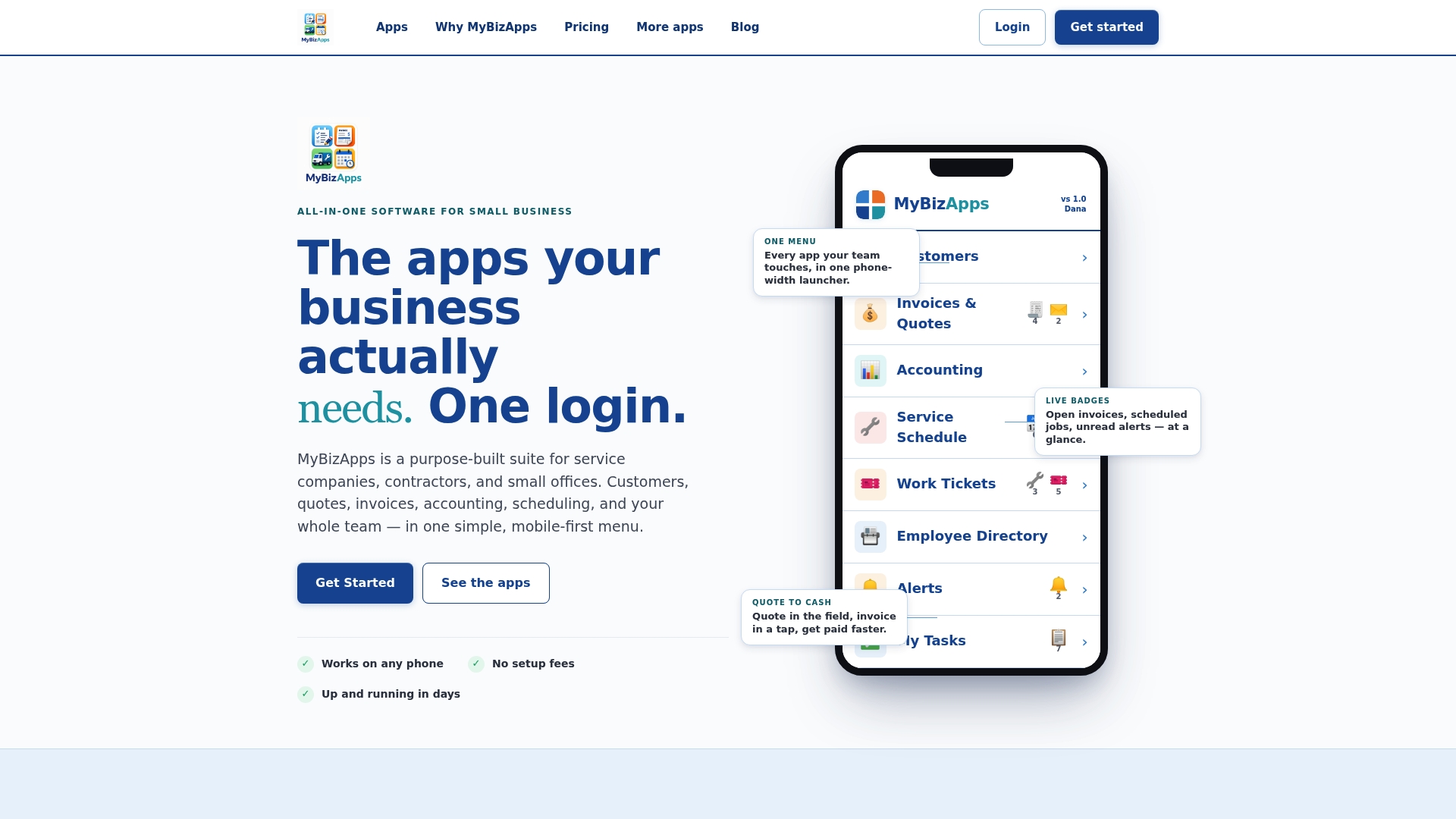
Faster invoicing and payment collection improve your cash flow visibility regardless of which accounting method you use, and keeping those records centralized makes any future method change far less painful. Our pricing page lists current prices for Accounting, Billing Module, and Service Scheduling, so you can see exactly what fits your setup before committing.
This article is general information, not a substitute for advice from a qualified financial advisor. Consult a qualified financial professional about your own circumstances before acting on anything here.
FAQ
What is the main difference between cash and accrual accounting?
Cash-basis accounting records income when you receive payment and expenses when you pay them, while accrual-basis accounting records both when they are earned or incurred, regardless of when cash moves. The difference comes down to timing, not whether a transaction eventually gets counted.
Which method is better for a small business?
It depends on your business model: many small service businesses with fast payment cycles and no inventory find cash basis simpler, while businesses with inventory, multi-month contracts, or lender reporting needs generally benefit from accrual. IRS Publication 538 outlines the eligibility rules that determine which option is even available to you.
Can I switch from cash to accrual accounting later?
Yes, switching methods may require filing Form 3115 with the IRS, and a Section 481(a) adjustment may apply. The requirements and tax impact depend on your situation, so consult a tax professional. Working with a tax professional before filing helps you understand the timing and tax impact ahead of the switch.
Do I need accrual accounting if I have inventory?
Generally yes, businesses that buy and sell inventory are usually required to use an accrual method for purchases and sales, though exceptions exist for smaller operations under the IRS gross-receipts threshold. Confirming your specific situation against current IRS guidance is worth doing before you file.
Does accounting method choice affect getting a loan?
Lenders and investors often expect accrual-based financial statements because they reflect receivables, payables, and period profitability more completely than cash-basis records. If you plan to seek financing, keeping accrual records internally, even while filing taxes on cash basis, can make that process smoother.
Sources
- Publication 538 (01/2022), Accounting Periods and Methods | Internal Revenue Service
- Fasb
- Digital
- Cash vs. Accrual Accounting for Small Businesses: Which Method to Use | Blue Cloud CPA